How attachment forms in childhood (and why it will shape the way your child relates to the world)
How everyday gestures shape secure, avoidant, anxious or disorganised attachment in childhood, and why repairing matters more than getting it right.

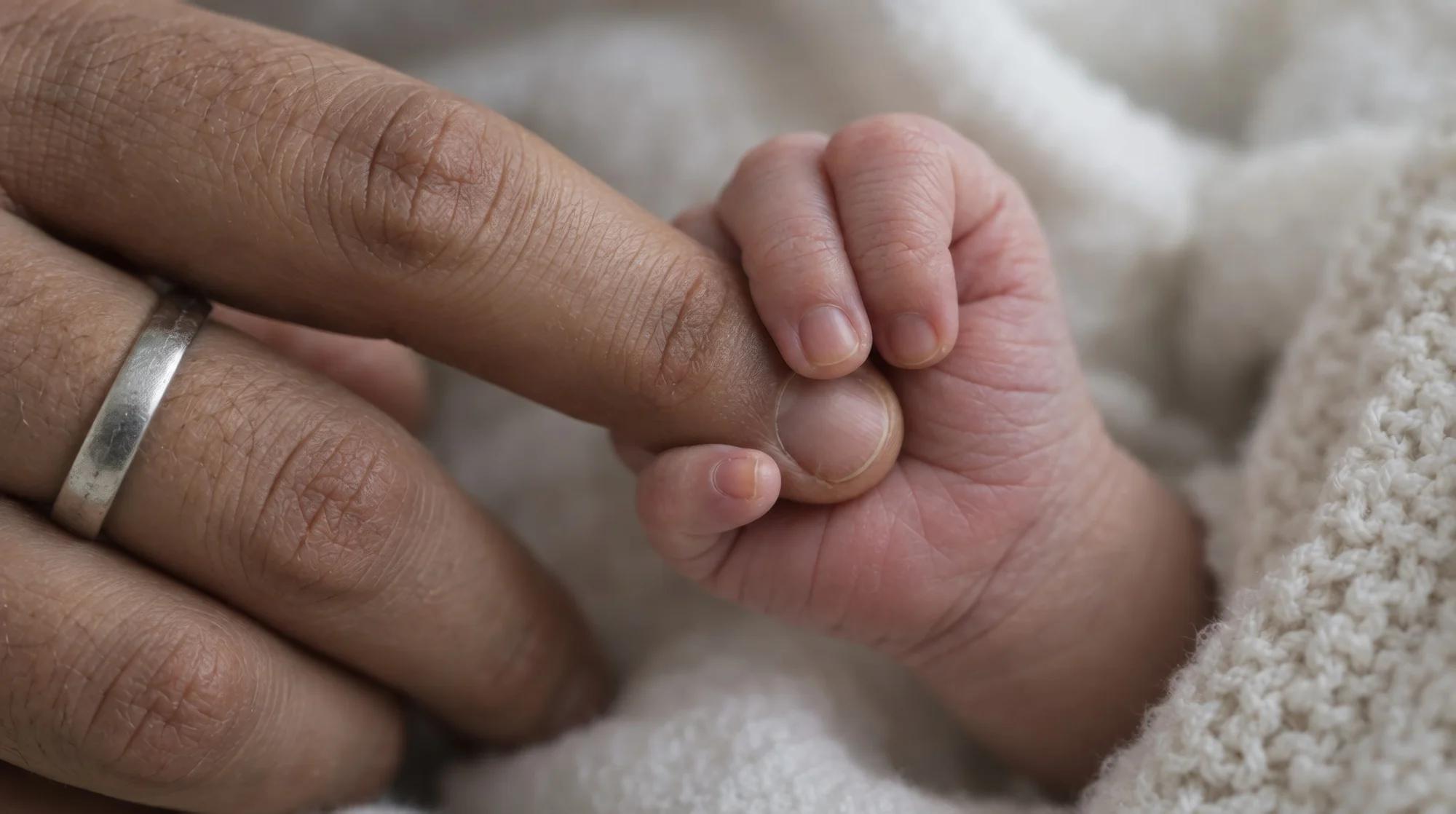
Every child is born with a deep need: to feel safe with the person who cares for them.
That security isn’t taught with words, but through hundreds of everyday gestures: responding to crying, looking on calmly, holding them when fear appears, answering when the child needs comfort. It’s in these small, repeated experiences that what we know as attachment, the first emotional bond of our lives, begins to be built.
That bond is much more than a relationship between a child and their parents. It’s the place from which the child learns how relationships work and where they should stand within them. Little by little they’ll build ideas about themselves and about others: whether they can trust when they need help, whether expressing their emotions is safe or whether they’ll have to learn to manage them alone.
When a child grows up feeling safe
When a child finds an available attachment figure who responds sensitively most of the time, they develop what we call secure attachment.
This doesn’t mean responding perfectly to all their needs. In fact, the paediatrician and psychoanalyst Donald Winnicott introduced a concept that is still a reference point in developmental psychology: the good-enough mother.
With this idea he explained that children don’t need perfect caregivers, but adults who, most of the time, are available, know how to repair when they get it wrong and allow the child to gradually tolerate small frustrations in a progressive, safe way.
It’s precisely this combination of care, repair and small doses of frustration that supports healthy emotional development.
Every bond goes through moments of disconnection. What matters is that there’s a stable tendency to care, comfort and repair.
Thanks to that experience, the child learns that they can explore the world because they have a safe place to return to when something frightens or overwhelms them.
From that security they dare to play, try new things, make mistakes and develop their autonomy.
Paradoxically, the most independent children aren’t usually the ones who need their parents least, but those who have learnt that they can count on them when they really need them.
When expressing emotions stops being safe
Not every child has that experience.
Some discover very early on that showing what they feel comes at a cost.
Perhaps their needs are ignored, played down or met with anger. Or perhaps they grow up with adults who, for various reasons, can’t consistently respond to their emotional needs.
Then the child does something extraordinary.
They adapt.
Because a child can’t stop needing the people who care for them. Their survival depends precisely on that bond.
The only thing they can do is change the way they express that need.
This is how insecure attachment styles appear.
They aren’t a problem the child is born with, nor a flaw in their personality. They’re strategies the child develops to protect themselves and keep the bond with the people they need in order to survive.
The child who learns not to need: avoidant attachment
Let’s imagine a baby crying in their cot who receives no comfort. At first they’ll insist again and again. They’ll seek the adult’s gaze, touch and closeness.
But if that response repeatedly fails to come, their nervous system will end up learning something very painful: asking for help changes nothing. And little by little they’ll stop doing it.
It’s important to understand that they don’t stop needing affection, comfort or protection. What they stop doing is showing that need.
When these children grow up they often seem very independent, calm and self-sufficient. They adapt easily, complain little and we often hear phrases like: “Well, he’s always been very independent.”
Yet behind that apparent calm there is usually a great effort not to show vulnerability.
They’ve learnt that feeling is still unavoidable, but expressing what they feel isn’t always safe.
In adolescence or adulthood this pattern can translate into difficulty fully trusting others, expressing emotions, asking for help or feeling comfortable with intimacy.
The child who fears being forgotten: anxious attachment
Other children go through a very different experience.
Their attachment figure is sometimes available and affectionate, and at other times distant, irritable or emotionally absent.
For a young child this creates enormous uncertainty. They never know which version of the adult they’ll find.
As a result, their attachment system stays constantly switched on. They need to check again and again that the person is still there.
That’s why they cry more intensely, seek more contact, demand attention or find it very hard to separate from their attachment figures.
They aren’t trying to manipulate or get their own way.
They’re trying to feel safe.
When love is perceived as unpredictable, the brain learns that it must always stay on alert so as not to lose the bond.
In adolescence and adulthood this learning can translate into relationships marked by an intense fear of abandonment, a constant need for reassurance or great difficulty tolerating emotional distance.
When the person who should protect is also frightening: disorganised attachment
There are even more complex situations.
They arise when the very person who should offer protection also causes fear. This can happen in contexts of abuse, neglect or when the adult is going through great emotional instability that prevents them from fulfilling that role safely.
The child is caught in a conflict that cannot be resolved.
They need to come close to feel protected, but at the same time they’re afraid of the person who should be caring for them.
That’s why these children can show very contradictory behaviour: they seek contact and, at the same time, reject it; they need help, but distrust whoever tries to offer it.
In reality, they live with great inner chaos between the wish to connect and the fear of doing so.
They learn that, if they can’t count on the person who should protect them, it’s better not to count on anyone.
Is it possible to repair the bond?
The good news is that attachment isn’t set in stone.
Although early experiences leave a deep mark, the brain keeps learning throughout life, and relationships can also become reparative experiences.
In the therapeutic space, many children find for the first time a consistent, safe and predictable relationship from which to learn to recognise their emotions, name them and express their needs without fear.
And for mums and dads there’s an important message too. We aren’t born knowing how to care for someone emotionally.
The way we support our children is deeply influenced by how we ourselves were supported.
That’s why, very often, helping a child takes more than learning new parenting tools. We also need to understand our own story, identify our wounds and develop a different way of relating.
Winnicott also explained that a good-enough mother is, inevitably, a bad-enough mother at certain moments. Not because she neglects her child, but because she can’t anticipate all their needs or always respond immediately. These small frustrations, when they happen within a secure relationship, don’t damage attachment; on the contrary, they help the child develop tolerance for waiting, trust and autonomy.
The problem isn’t these everyday lapses, but a sustained lack of emotional availability or an inability to repair when the bond breaks.
Because supporting a child from a place of love isn’t about having all the answers and always being calm. It’s about learning to be present when a child needs us most, and repairing when we haven’t been able to be.
In the next article we’ll look at how to recognise the signs that may show which attachment style your child is developing, and how to interpret those behaviours without resorting to labels.